
Every Utah winter has a week — usually more than one — when the valley turns into a bowl of gray. The inversion parks cold air under warm, traps everything we emit down here with us, and the PM2.5 readings climb until the mountains disappear. You can’t fix outdoor air. But the air inside your house is a different story, and September is the right month to get it ready — before the first red-air day, not during it.
Here’s the honest version of what works, what’s overkill, and what order to do it in.
Start with the boring champion: the filter
No device in the indoor-air conversation earns its cost like the humble furnace filter — if it’s the right one, in the right cabinet, changed on schedule.
The rating that matters is MERV. For inversion season, the particles you care about are the fine ones — PM2.5, the stuff that gets past your nose and deep into lungs — and capturing them meaningfully starts around MERV 11 and gets serious at MERV 13.
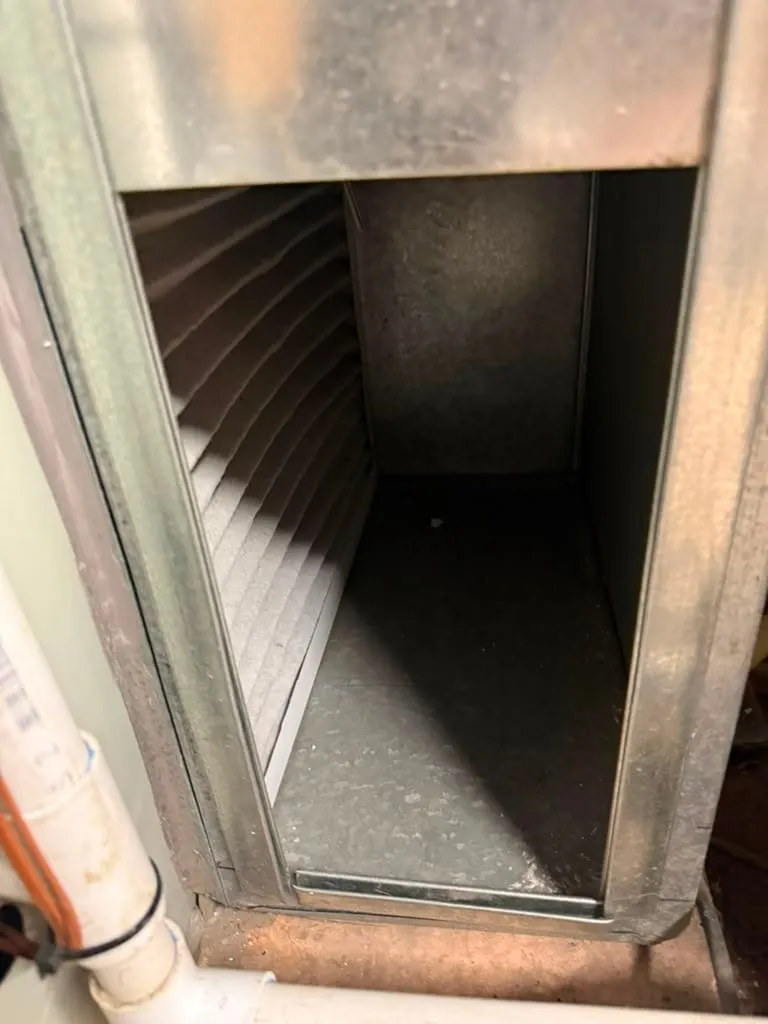
But there’s a catch nobody selling filters mentions: a high-MERV filter in a thin 1-inch slot is a compromise. The denser the media, the harder your blower works to pull air through it, and a 1-inch MERV 13 can choke airflow enough to hurt comfort and equipment life. The right way to run high-MERV filtration is a 4-inch media cabinet — more filter surface, less resistance, and the filter lasts months instead of weeks. It’s a modest one-time modification to the return side of your furnace, and it’s the single upgrade we recommend most often for inversion-conscious homes.
Sealed ducts: the fix nobody thinks of
Here’s a question worth asking: if your filter is good, why is the house still dusty?
The usual answer lives in the ductwork. Return ducts — the ones that pull air back to the furnace — often run through attics, crawl spaces, and garages. Every leak on that side of the system is a straw sipping unfiltered air from the dirtiest spaces in the house, straight into the blower, downstream of nothing. Your filter never gets a vote.
Duct sealing and repair closes those straws. During inversion weeks it means the air circulating through your home is air that actually passed through your filter; the rest of the year it means less dust, better airflow, and a system that isn’t cooling your crawl space. If your home is older, or the dust never matches how good your filter is, start here before buying any device.
The add-on gadgets: an honest sorting
Inversion season is also upsell season, so here’s the sorting we use in our own indoor air quality work:
- Worth it for many homes: the media filter cabinet above; a whole-home humidifier (Utah winter air is brutally dry — this is comfort and woodwork protection more than filtration); portable HEPA units for the bedroom of someone sensitive.
- Worth it for specific problems: UV lights at the coil for persistent biological smells; upgraded ventilation for tight newer homes that trap cooking and off-gassing.
- Ask hard questions first: high-priced “air scrubber” devices pitched as cure-alls. Some technologies are legitimate; plenty of installs happen before anyone checked the filter, the cabinet, or the ducts. If a quote jumps straight to a four-figure device, ask what specific, measured problem it solves. An honest answer names the problem. A sales answer names the discount.
The September logic
None of this is an emergency today — which is exactly the point. The first hard inversion usually settles in around the holidays, wildfire smoke can show up even earlier, and every filtration upgrade works better installed calmly than ordered during a red-air week when everyone else calls too.
A fall tune-up is the natural moment to handle it: the furnace gets its pre-season service, the filter setup gets an honest assessment, and if a media cabinet or duct sealing makes sense for your house, you’ll know the real numbers with no pressure attached. If the answer is “your setup is fine, just change the filter in December,” you’ll get that answer too — it’s the one we give more often than you’d think.
Breathe easy this winter. It mostly comes down to preparation done in the fall.