
Our services
A furnace built for Utah winters, installed for the long haul
Eighty percent or high-efficiency? Trane or Goodman? We'll walk you through the real trade-offs with numbers for your house, then install the one you pick like our name is on it — because it is, for five years of free labor coverage.
- Licensed & insured · DOPL #13652729-5501
- Family-owned since 2006
- Se Habla Español
The 80% versus high-efficiency conversation, honestly
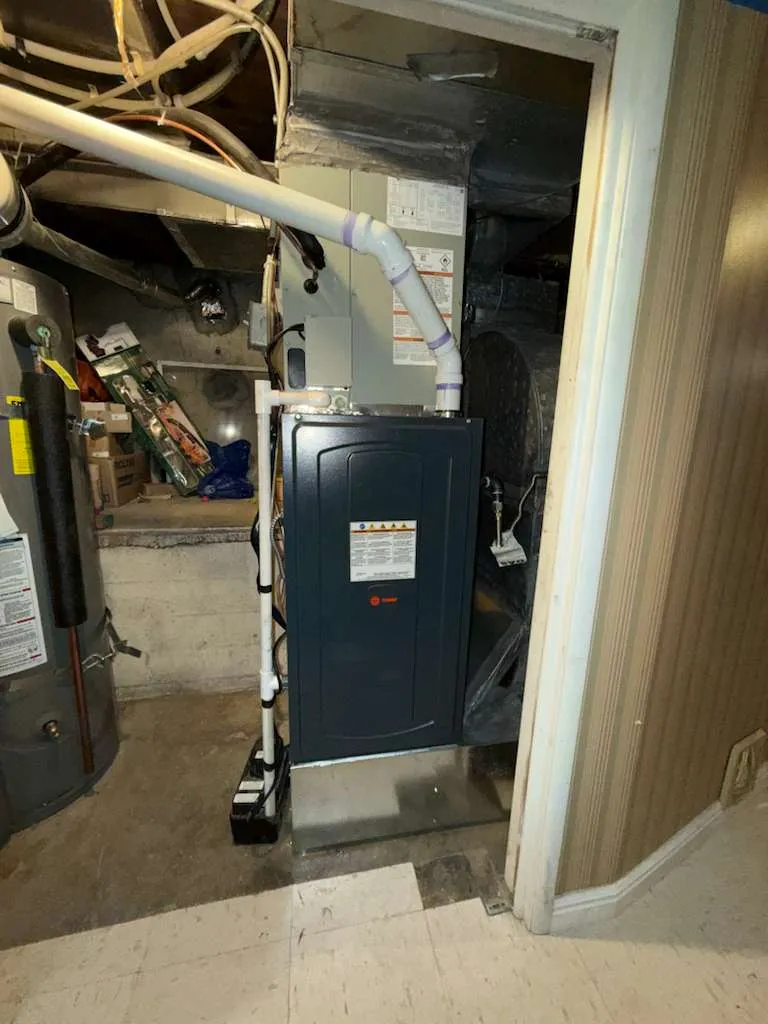
Every furnace sales pitch in the valley leans on the same line: "the high-efficiency unit pays for itself." Sometimes that's true. A condensing furnace captures heat an 80% unit sends up the flue, and across a long Wasatch Front winter that's real money back. But the honest version includes the other half: high-efficiency units cost more up front, need new PVC venting and a condensate drain, and on certain older homes that re-work changes the payback math entirely.
So we don't pitch a tier. We price both for your house, estimate the yearly difference from your actual usage, and tell you where the break-even sits. Some customers walk away with the 95% unit, some with the 80%, and both made the right call for their situation.
Sized for altitude, not for a catalog
Salt Lake City sits above 4,200 feet, and gas furnaces lose heating capacity as the air thins. A unit picked straight from a catalog without altitude correction comes up short exactly when you need it most — the single-digit January night. We size for your home's real heat loss, then derate for elevation, so the furnace we install still has headroom when the inversion settles in.
Two-stage and modulating furnaces earn their keep here too. Utah winters swing between mild afternoons and brutal nights, and a furnace that can run low and slow most of the time keeps rooms more even, cycles less, and runs quieter than a single-stage unit slamming on and off.
Installed to code, commissioned by the numbers
A furnace install is gas, flue, electric, and airflow, and each one gets verified, not eyeballed: gas pressure measured and adjusted, venting sloped and supported to code, temperature rise set inside the manufacturer's range, and every safety in the chain tested before we call it done. Then we register your manufacturer warranty for you — most brands quietly cut coverage when nobody registers, and we don't let that happen to our customers.
Pricing
What drives the price
Furnace replacement pricing depends on the equipment tier and what your home's venting, ductwork, and gas line need. Your free estimate spells all of it out in writing. The number moves with:
- Efficiency tier — a standard 80% furnace versus a 95%-plus condensing unit
- Capacity, sized for your house and corrected for our 4,200-plus feet of altitude
- Venting — high-efficiency furnaces vent through PVC and need a condensate drain, which changes the scope on older homes
- Single-stage, two-stage, or modulating burners and blower type
- Brand tier: Trane premium or Goodman value
- Ductwork corrections, thermostat, permit, and haul-away
How it works with us
No surprises, start to finish
Free in-home estimate
We look at the furnace, the venting, the gas line, the ducts, and the house itself. Real scope, real numbers.
Pick your tier
Options in writing — usually an 80% path and a high-efficiency path — with our honest read on which pays off in your situation.
Install day
Old furnace out, new one set, venting and condensate done to code, gas connections tested, system commissioned and burn-tested. Most swaps finish in a day.
Walkthrough and registration
Thermostat programmed, filter location shown, manufacturer warranty registered for you, paperwork in hand.
Furnace Installation & Replacement questions
Straight answers
Is a high-efficiency furnace worth it in Utah?
Often, but not always. A 95%-plus furnace wrings more heat from every therm, which matters across our long heating season. But it also needs PVC venting and a condensate drain, and on some homes that re-work eats into the payback. We'll price both paths against your actual gas usage and let the math decide.
Why does altitude matter for my furnace?
Gas equipment loses capacity as the air thins — a real factor at Salt Lake City's elevation and above. A furnace that's perfect at sea level runs short here unless it's sized and set up for altitude. We correct for it on every job, because a furnace that can't keep up on the coldest night was sized wrong on day one.
How long does a furnace replacement take?
A straight swap usually finishes in one day. Converting from an 80% furnace to high-efficiency adds venting and drain work, which can push into a second day on some homes. You'll know before we start.
Should I replace my AC at the same time?
Only if it makes sense. The furnace blower moves your AC's air, so the two need to match — but matching doesn't always mean replacing both. If your AC is mid-life and compatible, keep it. If it's near the end, combining the jobs saves real labor. We quote it both ways.
What's included in the 5-year labor warranty?
Our workmanship on the installation, free, for five years — most companies cover one or two. It stays active with an annual professional tune-up from our team, and it's on top of the manufacturer's parts warranty, which we register for you. Ask for the full terms with your estimate.
Can I finance it?
Yes — three paths, and checking your options starts with a soft pull that doesn't affect your credit score. Every option is subject to credit approval by the lender. Details on our financing page, or ask at the estimate.
Ready when you are
Call or text and a real person from our Salt Lake City shop will get you scheduled. Monday through Friday, 8 to 5 — after-hours service available by dispatch. Se Habla Español.