
Our services
No heat? Let's get you warm again.
A dead furnace in January isn't a maybe-next-week problem, and we treat it that way. We diagnose all makes and models, explain the fix in plain English or Spanish, and quote a firm price before any work starts.
- Licensed & insured · DOPL #13652729-5501
- Family-owned since 2006
- Se Habla Español
Winter here doesn't negotiate
When an inversion parks over the valley and nights drop into the teens, a furnace failure moves to the top of everyone's list. The good news: most no-heat calls trace to a short list of parts — flame sensors, hot surface igniters, pressure switches, capacitors, blower motors, and control boards. The fix is usually faster than the worry.
Modern furnaces also tell on themselves. That blinking LED behind the little window is an error code, and it points us in the right direction before we even open the cabinet. If you can count the flashes when you call, tell us — it helps.
Safety first, always
A furnace burns gas inside your house, which is why we take shortcuts personally. Every repair visit includes a look at the safety chain: flame proving, limit switches, venting, and a visual inspection of the heat exchanger. If we ever find a cracked exchanger, we'll show you — photos, not hand-waving — because that's a health issue, not an upsell.
And if you ever smell gas, the order of operations is not negotiable: everyone out of the house, then Dominion Energy's emergency line, then us. We'd rather lose a service call than have you stay in a house that isn't safe.
Honest repair-or-replace math
A fifteen-year-old furnace with a failed igniter is worth fixing. The same furnace with a failing blower, rusted burners, and a history of limit trips is spending your repair money on borrowed time. We'll lay out both paths with real numbers — what today's repair costs, what a replacement runs, and what we'd do if it were our own basement. The decision stays yours.
Pricing
What drives the price
Furnace repair prices depend on what actually failed, and we won't know that until we've tested the system. What we promise: a firm number before we start, and an honest opinion about whether the repair is worth making. The price moves with:
- The failed component — flame sensors and igniters sit at one end, gas valves and blower motors at the other
- Your furnace's age and brand, which control parts availability
- Single-stage versus two-stage or modulating equipment
- Access — a furnace in a tight attic or crawlspace takes longer than one in a garage
- After-hours dispatch, if the failure won't wait for business hours
How it works with us
No surprises, start to finish
Call or text us
Describe what it's doing — clicking, blowing cold, short bursts, nothing at all. Error codes flashing on the board help too.
We test, not guess
Ignition sequence, flame signal, gas pressure, blower, safeties. We find the component that failed and check what stressed it.
Firm price, your call
You get the number and our honest read on repair versus replacement before anything happens.
Warm house, backed work
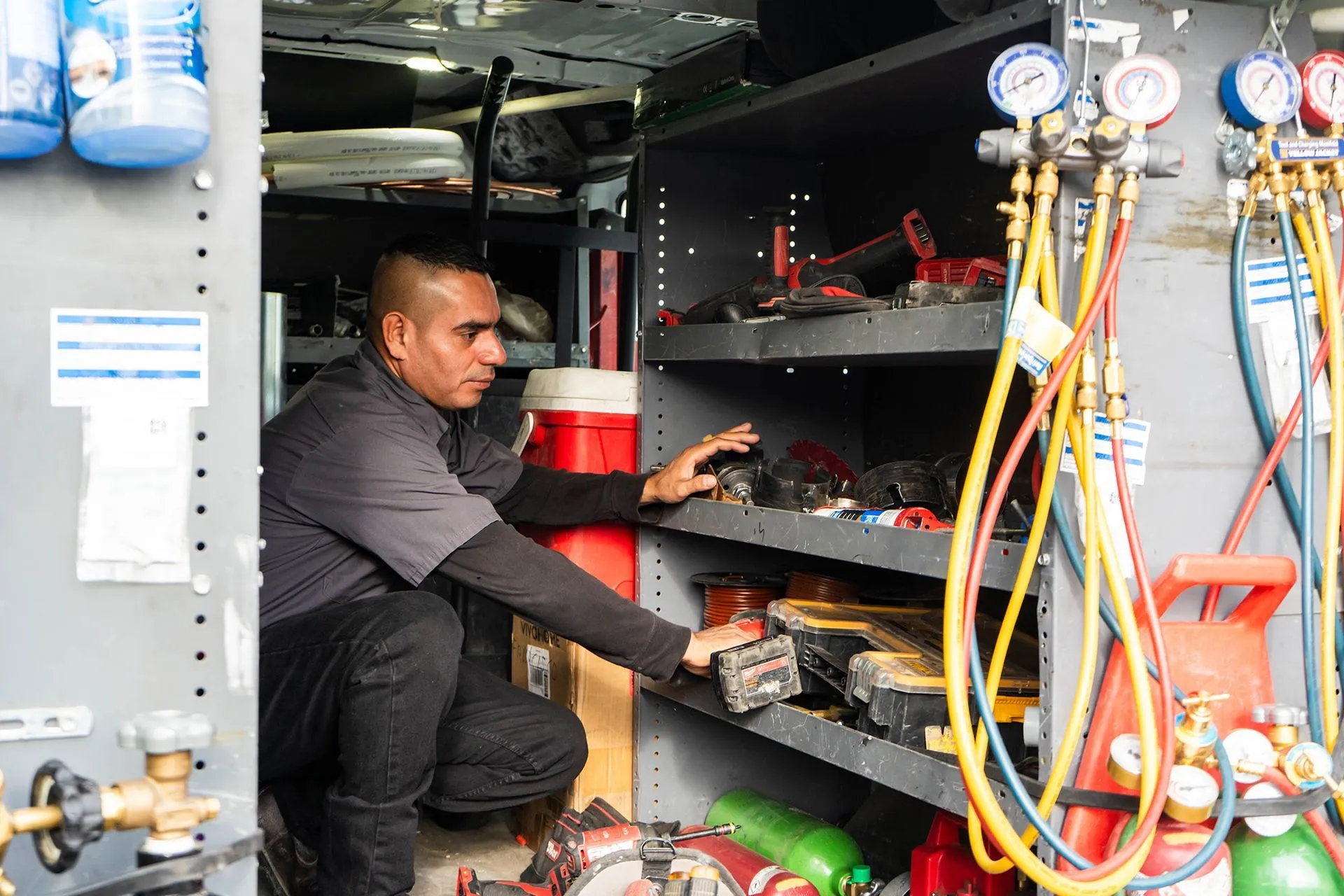
Most repairs finish the same visit when the part is on the van.
Furnace Repair questions
Straight answers
My furnace runs but blows cold air. What's going on?
Often the burners are failing to light or staying lit — a dirty flame sensor, a cracked igniter, or a gas supply issue — so the blower moves unheated air. It can also be a thermostat fan setting or, on high-efficiency units, a condensate blockage tripping a safety. Each has a different fix; that's what the diagnosis sorts out.
I smell gas. What should I do?
Leave the house first — don't flip switches or light anything on the way out. Then call Dominion Energy's emergency line and let them clear the leak. Once the gas side is safe, call us and we'll handle whatever the furnace needs. Safety order matters: gas company first, HVAC company second.
How old is too old to repair?
Most furnaces in our climate give 15 to 20 years. Past that line, or any time a heat exchanger shows cracks, we'll talk replacement instead of repair — a cracked exchanger can leak combustion gases into your air, and no honest company patches one. Short of that, plenty of older furnaces earn another season with a modest fix.
Why does my furnace start, run a few minutes, then shut off?
Short cycling usually points to an overheating safety trip: a clogged filter, a weak blower, blocked vents, or a failing limit switch. It can also be a flame-sensing problem. It's diagnosable in one visit, and catching it early protects the heat exchanger — the expensive part.
Do you repair my furnace brand?
Yes — all makes and models, from decades-old workhorses to current high-efficiency equipment. If parts still exist for it, we can usually fix it.
¿Hablan español?
Sí. Nuestro equipo habla español con fluidez. Llámenos al (801) 678-5748 — con gusto le explicamos el problema y el precio en su idioma.
Ready when you are
Call or text and a real person from our Salt Lake City shop will get you scheduled. Monday through Friday, 8 to 5 — after-hours service available by dispatch. Se Habla Español.