
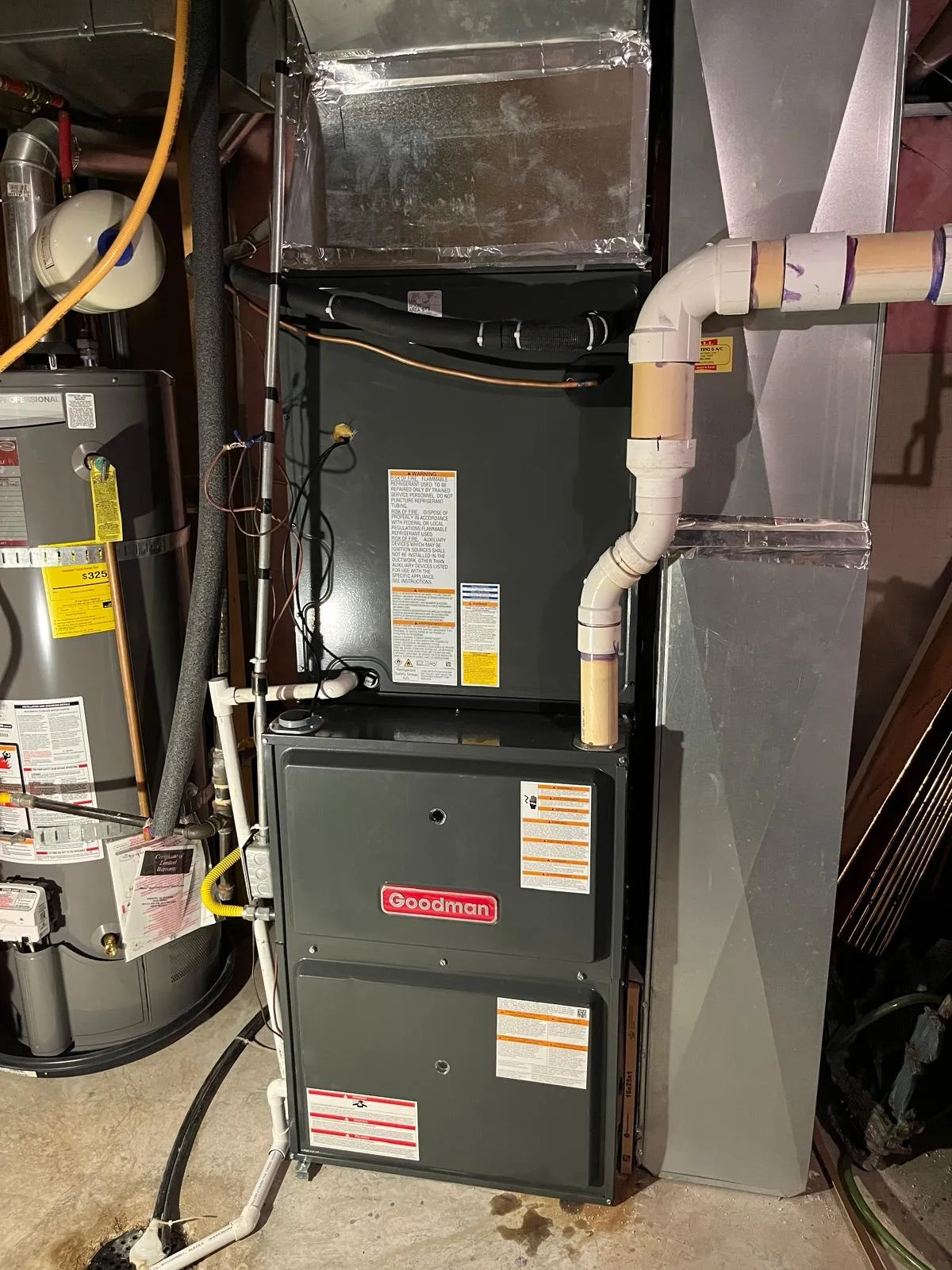
Replacing a furnace sounds like a big, messy, multi-day project. It is a big job, but it should not be a mystery, and it should not leave you without heat overnight. Every furnace replacement we do is finished the same day it starts. Here is what that day actually looks like, so you know what to expect and what to ask any contractor you are considering.
Before install day: the estimate
A good install day starts with a good estimate. Before anything is ordered, someone should come to the house and look at the furnace, the venting, the gas line, and the ductwork it connects to, then size the new furnace to your home instead of copying the old label. Our checklist of what a furnace estimate should include covers what to look for. The estimate is free, and you get options in writing.
The night before
You do not need to do much, but a few things help the day go smoothly:
- Clear a path from the door to the furnace, and a few feet of space around it. Boxes stacked against the furnace closet are the most common slow start.
- Plan for pets. Doors will be open and the crew will be carrying equipment in and out.
- Leave room to park a work truck close to the door if you can.
- Think about the thermostat. If you want a different one, say so ahead of time so it comes on the truck.
Morning: the old furnace comes out
The crew arrives and confirms the plan with you. Then they shut off the gas and power to the furnace, disconnect the gas line, the venting, and the ductwork, and carry the old furnace out. It leaves on our truck. You do not have to arrange disposal.
This is also when surprises show up, if there are any: a rusted plenum, a vent that was never right, a return that is too small for the house. If the crew finds something that changes the job, they tell you before they do anything about it. Nothing gets added without your OK.
Midday: the new furnace goes in
The new furnace is set in place, and the crew connects:
- The ductwork, with new transitions where the new furnace is a different size or shape than the old one.
- The venting. An 80% furnace vents through a metal flue. A 96% furnace vents through PVC pipes out the side of the house and drains water through a condensate line. Our guide to 80% vs. 96% furnaces explains the difference.
- The gas line, connected and tested for leaks.
- The electrical and the thermostat wiring.
All of it is done to code, and the permit is part of the job.
Afternoon: the checks before anyone leaves
This is the part that separates a careful install from a fast one. Before the crew calls it done, the furnace is fired and tested: gas pressure set to the manufacturer’s range, the flame checked, the system commissioned and burn-tested, and every safety in the chain tested. A furnace that lights is not the same as a furnace that is set up right, and at our altitude the setup matters.
End of the day: the walkthrough
Before the crew leaves, someone walks you through:
- The thermostat, programmed the way you want it.
- The filter: where it goes, what size it takes, and how often to change it.
- The paperwork: the manufacturer warranty registered for you, and our free 5-year labor warranty in writing.
- The rebate, if your furnace qualifies. Enbridge Gas’s ThermWise program pays $300 to $350 on qualifying 95%+ furnaces in 2026, and the application needs the model and serial numbers from your itemized invoice. Details are on our rebates page.
By evening the house is warming up again.
Why we do it in one day
Customers replacing a furnace should never have to spend a night without heat just because they chose to upgrade. That is the whole reason behind the one-day rule, and it is easiest to keep when the job is planned, not an emergency.
That is also why fall is the best time to replace an aging furnace. You pick the day, you compare estimates calmly, and the furnace is swapped before the first real cold snap, instead of on the night the old one quits. It is the idea behind our Beat the First Cold campaign: no deadline, no price games, just better timing.
Thinking about it? Request a free estimate or call or text (801) 678-5748, Monday through Friday, 8 AM to 8 PM, in English or Spanish. If your furnace has more winters left in it, we will tell you that instead.